Anamorphic 3D Billboards & Naked-Eye 3D Content

Perspective-accurate CGI built for corner LED screens and iconic city placements — the naked-eye 3D effect that stops traffic in Times Square, Shinjuku and Chengdu, produced to your media owner's exact technical specification.

Start a Billboard Project

Naked-Eye 3D Anamorphic L-shaped Billboards
Forced Perspective & Spatial Illusion

This L-shaped LED deployment demonstrates our absolute mastery over forced-perspective mathematics and optical depth. By calculating precise viewer sweet spots, we engineer hyper-realistic 3D content that shatters the boundaries of flat architecture, turning retail flagships into viral beacons.

What is anamorphic 3D? The technique explained

Anamorphic 3D is an optical-illusion technique that distorts flat video content so it appears as a true three-dimensional object — or a deep space — when viewed from one exact perspective. The mathematics are old: anamorphosis has been used by artists since the Renaissance, painting deliberately distorted images that resolve into a recognizable picture only when the viewer stands at a specific point (or views the work through a specific mirror), long before those distortions were ever printed or projected. Today's corner-LED "naked-eye 3D" billboards are the same geometry, executed with CGI at city scale.

Note on terminology: this page is not about anamorphic cinema lenses — the optics that squeeze a widescreen image into a narrower film or sensor frame, to be de-squeezed in post. That is a camera capture format and an entirely different subject. Here, "anamorphic" refers to perspective-distorted content that creates a 3D illusion for a viewer standing in the right place.

Single viewpoint

The illusion depends entirely on the precise physical location of the viewer's eye — or the camera lens that will film the viral clip. Every anamorphic piece is designed backwards from that sweet spot; move away from it and the perspective progressively collapses. Choosing the right sweet spot for real street traffic is a creative decision, not an afterthought.

Forced perspective

The content is mathematically warped across uneven physical structures — corners, curves, walls — so that all perspective lines converge correctly only from the primary angle. On an L-shaped screen this is what makes an object appear to stand inside a glass box, or leap clean out of the building.

Surface geometry

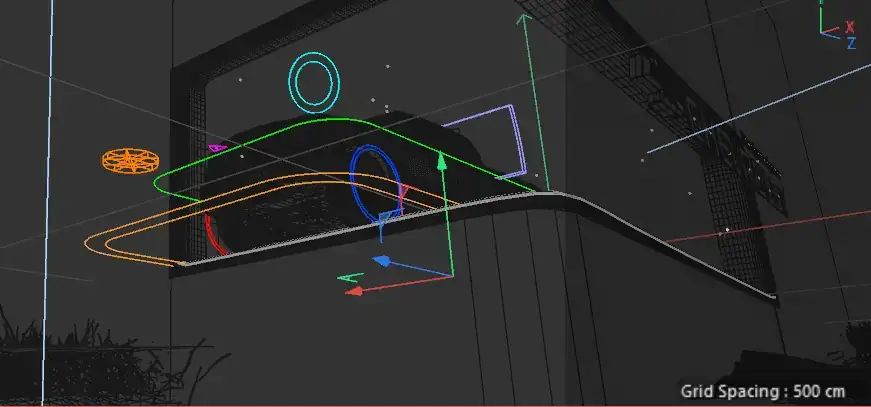
Accurate depth mapping of the physical environment is what makes virtual elements appear to interact with real architecture. Screen dimensions, corner angle, pixel pitch, bezel gaps and viewing distance are all measured before a single frame is animated — geometry errors are the number-one reason anamorphic campaigns fail.
How we build the illusion

The production workflow behind every MediaCraft naked-eye 3D campaign — the same pipeline we apply to projection mapping, where the "screen" is an entire building.

Step 01

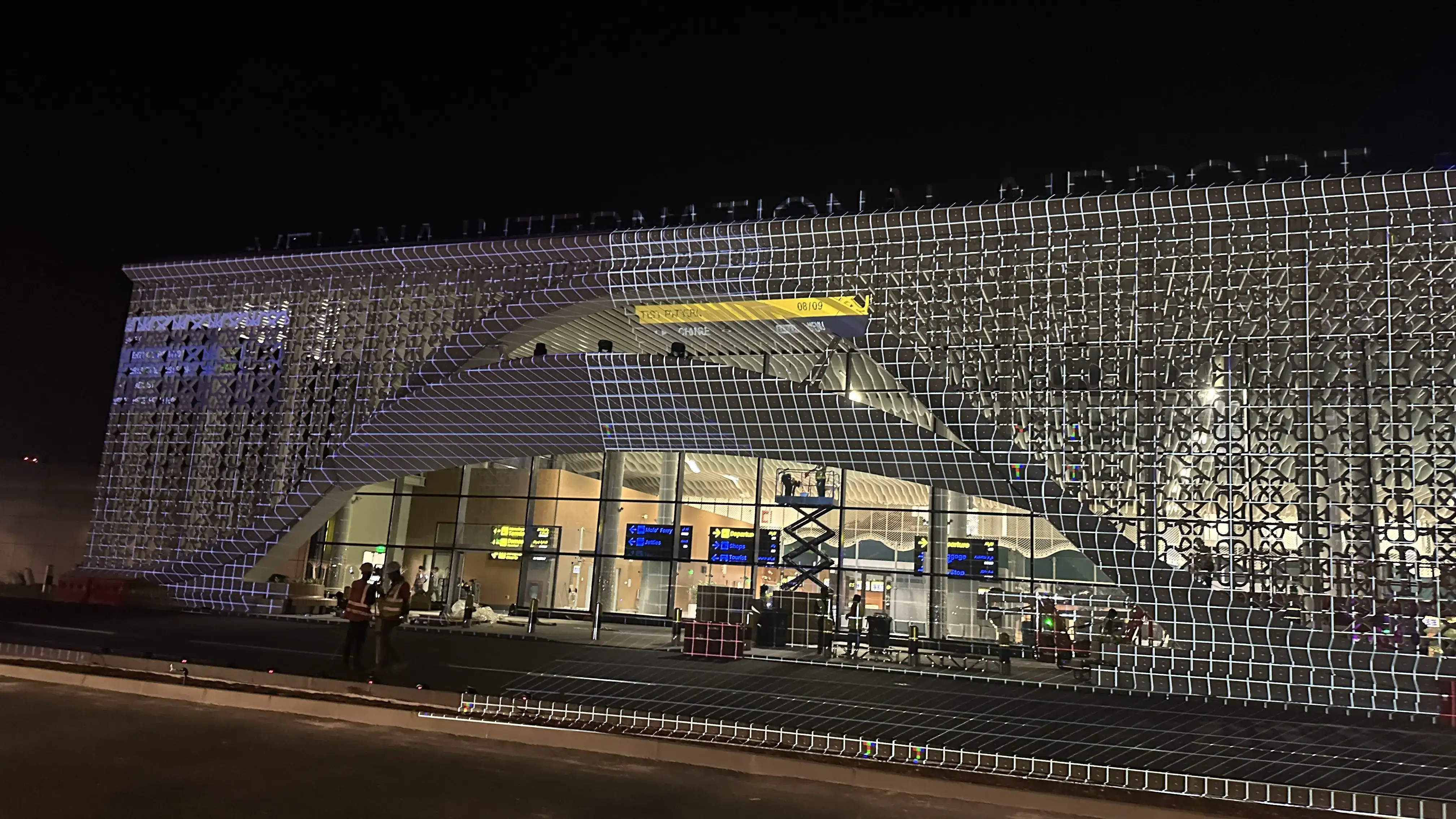
Survey & scanning

We measure or scan the target site to capture its true 3D depth and dimensions — screen faces, corner angle, sight lines and the audience's real position. The sweet spot is fixed here, on the street, before any artwork exists.

Step 02

3D content creation

The scene is modelled and animated in tools such as Blender, Cinema 4D, Houdini and Unreal Engine, with the virtual camera locked to the exact real-world sweet spot. Objects are staged inside a virtual box matched to the screen geometry, so they read as breaking out of it rather than sitting on it.

Step 03

Mapping & warping

The rendered output is warped, split and masked so every pixel lands on the right physical edge — via media servers on projection sites, or per-face content splits on multi-panel LED. This is where forced-perspective mathematics meets the real, imperfect building.

Step 04

Delivery to spec

Output is mastered to the media owner's native resolution, frame rate and file specification, so the campaign clears the operator's technical compliance check on first submission — on time for the booked flight dates.

Rendered for Extreme Scale

We control the digital pipeline from the first polygon to the final pixel. By backing our elite 3D artistry with massive, distributed cloud GPU clusters and proprietary neural workflows, we shatter traditional rendering bottlenecks — delivering flawless anamorphic content at resolutions exceeding 16K+.

Anamorphic 3D content production — CGI artist workflow and scene lighting

Absolute Human Control.

For brand-critical campaigns and complex screen geometry, there is no substitute for world-class human artistry. Our 3D artists execute frame-accurate modeling, hyper-realistic physics simulations, and precise optical masking to ensure your content maps flawlessly to reality — the millimetre discipline anamorphic illusions demand.

Neural rendering aesthetic for large-scale anamorphic spatial visuals

Custom Neural Rendering.

We do not rely on off-the-shelf AI. We engineer proprietary generative workflows backed by massive, distributed cloud GPUs. This allows us to train custom visual models specific to your campaign, generating ultra-high-resolution spatial art that scales to any corner screen, facade or dome.

Where it works best

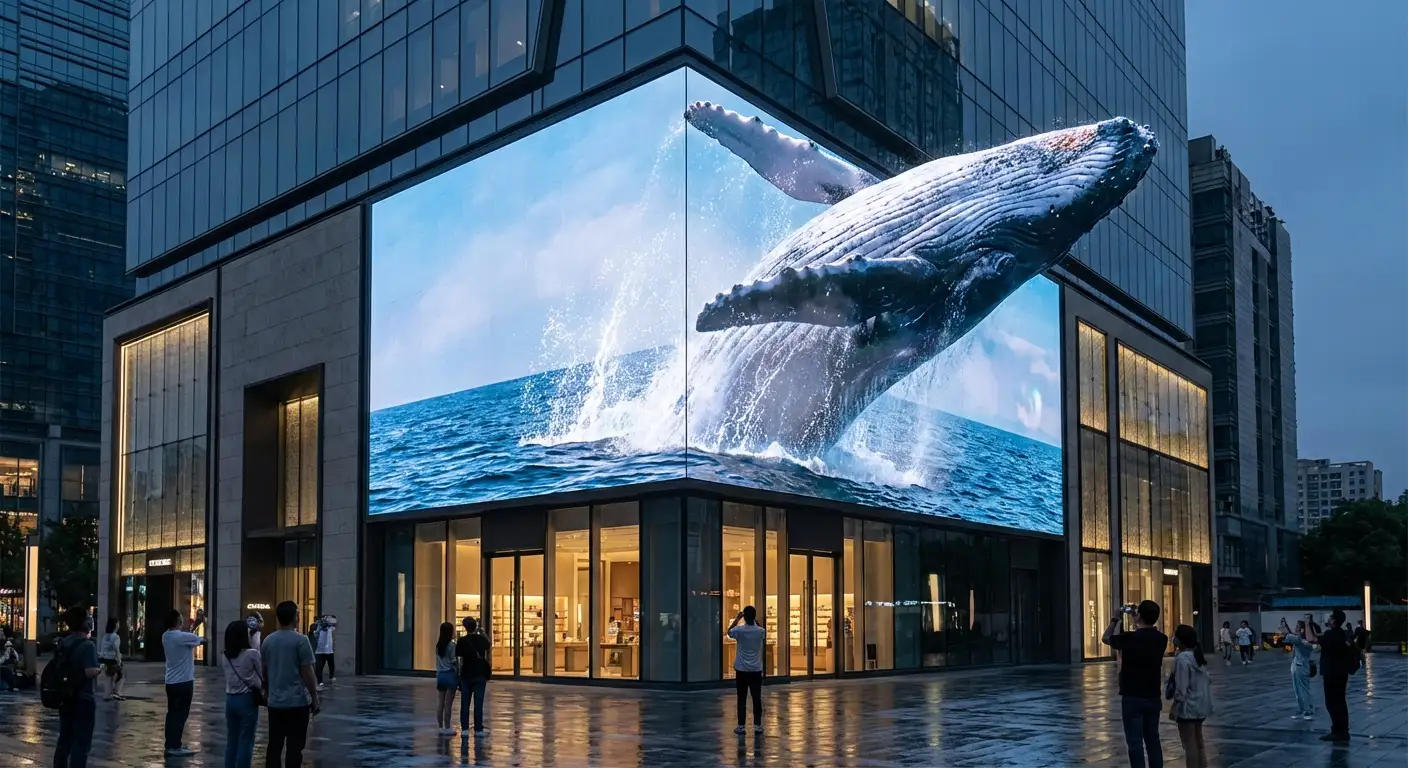
Naked-eye 3D whale breaching out of a corner LED screen at street level — anamorphic content visualization

Corner LED sites

Two screen faces meeting at roughly 90° — the canonical naked-eye 3D canvas, where the break-out illusion is at its strongest.

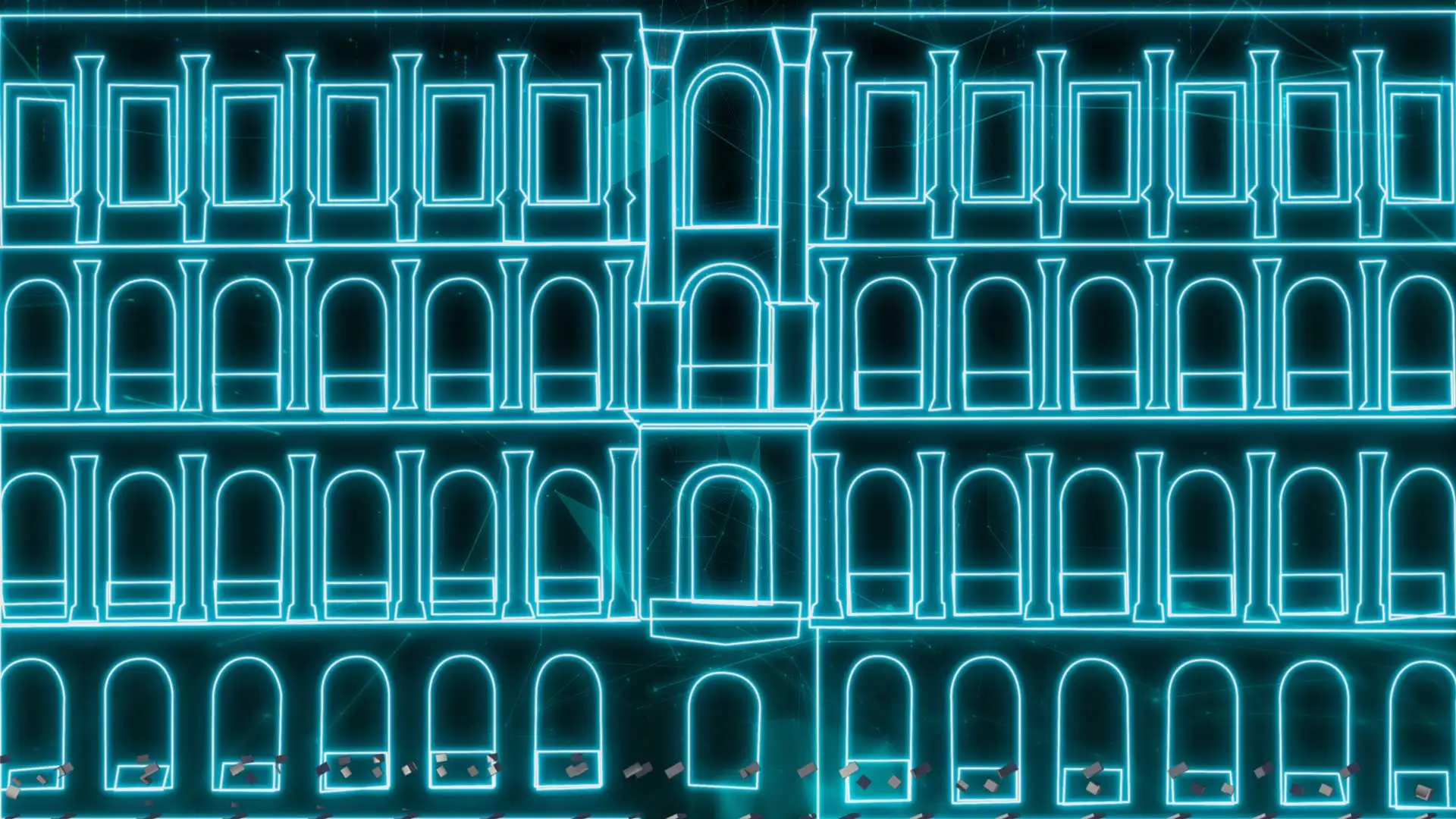
Wireframe depth map of a building facade prepared for anamorphic projection content

Curved & wrapped facades

Wrapped and curved screens in retail districts — every surface is depth-mapped first, so the illusion follows the architecture instead of fighting it.

Photoreal CGI beauty close-up produced for flagship retail screens

Flagship & in-mall screens

Store windows and feature screens where photoreal detail is viewed from metres away — content mastered for close inspection, not just distance.

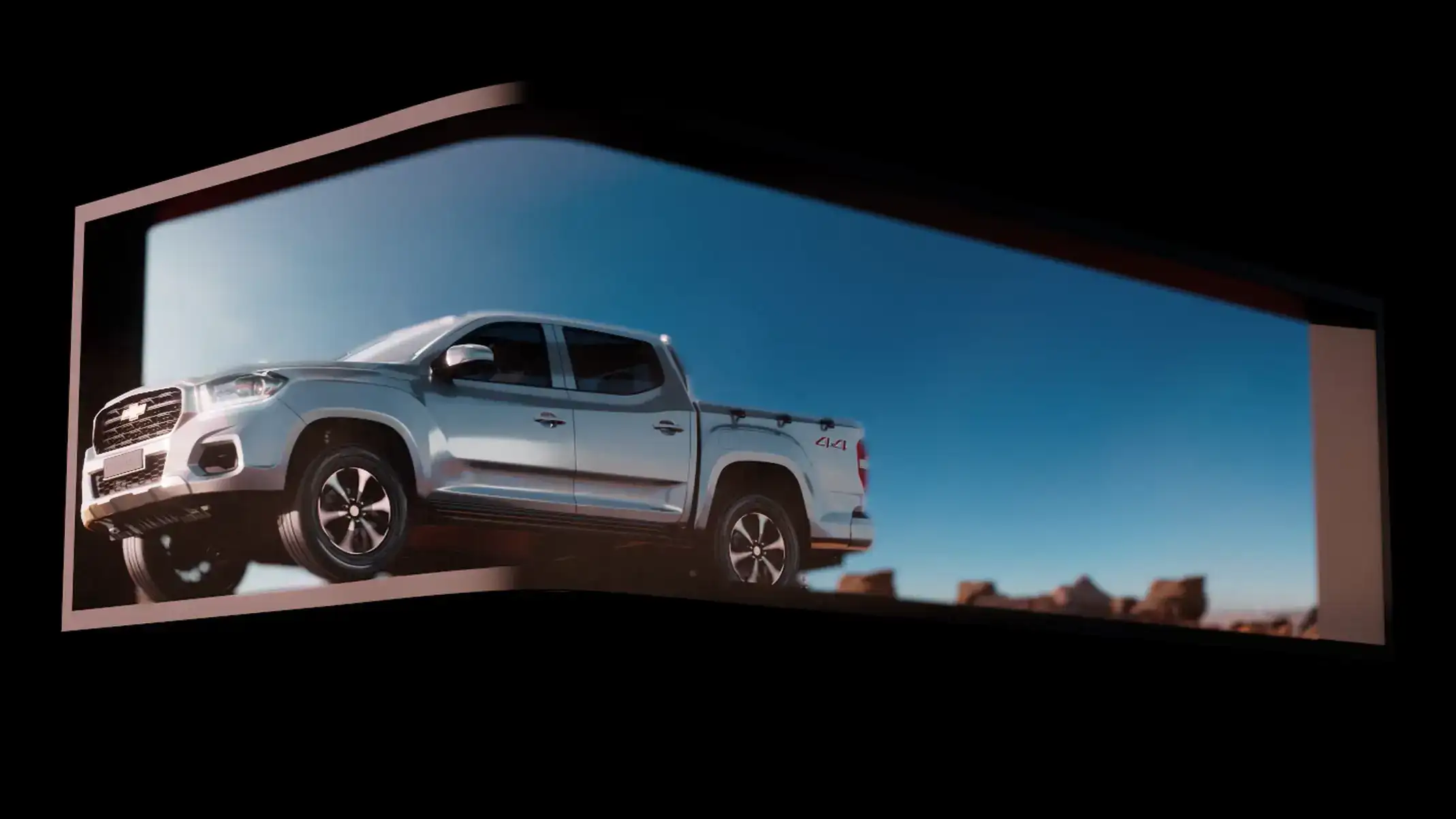
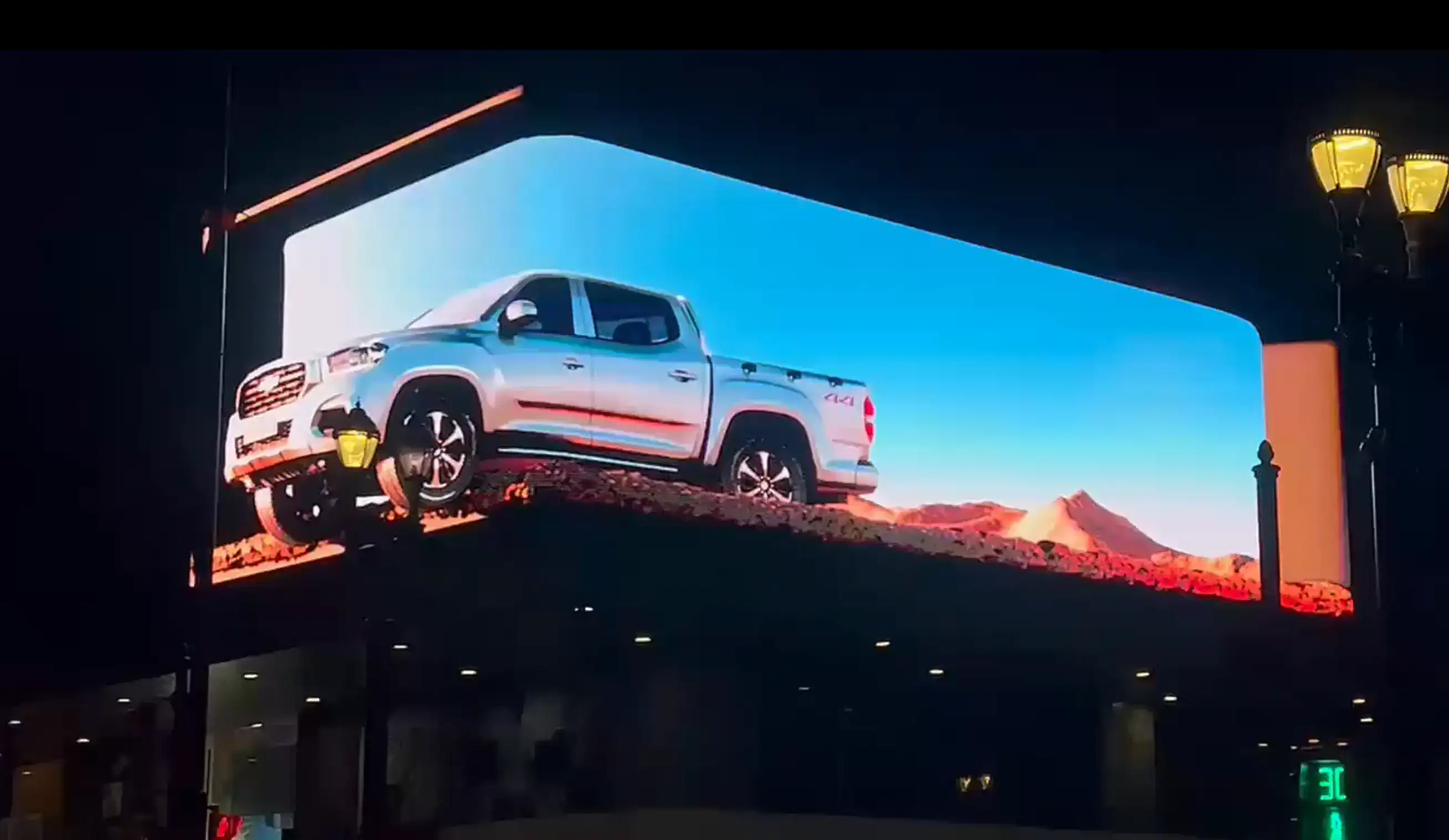
Pickup truck appearing to drive off an L-shaped anamorphic 3D billboard at night

Product launches

A single, highly shareable hero moment — the product breaking out of the screen is the clip that travels on social and earns the media spend twice.

The same forced-perspective craft also powers our FOOH (Fake Out-Of-Home) work — CGI spectacle composited into real city footage for social-first campaigns — and our projection mapping shows, where the anamorphic canvas is an entire building.

Frequently Asked Questions

What anamorphic 3D is, how the sweet spot works, and what buyers ask before commissioning naked-eye 3D content.

What is anamorphic 3D video?

Anamorphic 3D video is an optical-illusion technique in which flat video content is mathematically distorted so that, from one exact viewing position — the sweet spot — it appears as a real three-dimensional object or a deep space extending behind or in front of the screen. It powers the naked-eye 3D billboards seen in Times Square, Shinjuku and Chengdu, and works without glasses or any special equipment for the viewer.

What is the 'sweet spot' in anamorphic content?

The sweet spot is the physical location the illusion is designed for. All perspective lines in the distorted artwork converge correctly only from that point. Content designed by MediaCraft is engineered around the real street-level position where the audience — or the camera filming the viral clip — will actually stand; away from it, the image progressively skews, which is why sweet-spot planning is the first decision of any anamorphic project.

Is this the same as an anamorphic camera lens?

No. Anamorphic lenses are cinema optics that horizontally squeeze a wide image onto a narrower sensor or film frame, to be un-squeezed in post-production — a capture format, famous for oval bokeh and horizontal flares. Anamorphic 3D billboards use anamorphosis: perspective distortion of content across real surfaces to create a 3D illusion for a viewer. The two share a word, nothing else.

What is a naked-eye 3D billboard?

A naked-eye 3D billboard is CGI rendered for one specific viewing position so that content appears to break out of the screen without glasses. The illusion is created by distorting the artwork to match the exact geometry of the LED screen and the angle the audience stands at — most often a building corner where two screen faces meet.

What do you need from us to start an anamorphic project?

Screen dimensions and pixel pitch, the angle between screen faces, and the intended viewing position on the street. Photographs or drawings of the site are ideal. Without accurate geometry the illusion collapses when seen from the real vantage point, so this step matters more than on a flat-screen campaign.

Does anamorphic 3D work on a flat screen?

The strongest effect needs a corner or a curved screen, because the illusion depends on depth cues across two planes. Flat screens can still carry forced-perspective work with a convincing sense of depth, but the dramatic break-out effect associated with Times Square and Shinjuku placements relies on corner geometry.

What formats do you deliver?

Content is delivered to the media owner's specification, matched to the screen's native resolution and frame rate, including any per-face splits the site requires. We work to the technical specification issued by the operator so the campaign passes their compliance check on first submission.